consejos
Gran Fondo Guide 2026: What It Is and How to Ride Your First One
September 28, 2026 · GranFondoTemple·Leer en español
Some links are affiliate links. Buying through them may earn GranFondoTemple a commission at no extra cost to you.


A gran fondo is a long-distance, mass-participation road cycling event: a set route of 120 to 200 km, a timing chip, controlled roads, feed stations and a broom wagon behind the last rider. Anyone can enter. Most people on the start line aren’t racing anyone. They’re racing the cut-off time and their own target. This guide covers everything you need to ride your first one: how to pick the event and distance, how to train, what to eat and what to carry.
The short version: pick a medio fondo of 80-110 km for your first event, train 8-12 weeks with one long ride a week, eat every 20-30 minutes from the start, and run tubeless tyres. With that, you finish.
What is a gran fondo, exactly
The name is Italian for “big distance”, and the format was born in Italy before spreading to Spain, France and the rest of the world. In Spain the same thing is often called a marcha cicloturista. What they all share:
- A mass start of hundreds or thousands of riders, often grouped in pens by expected pace.
- Timing chip on the bike or race number, with an official time and classification.
- Cut-off times at control points. If you arrive too late, you’re asked to take the short route or climb into the broom wagon.
- Feed stations with water, isotonic drink and solid food every 30-50 km.
- Mechanical and medical support along the route, and roads that are closed or controlled by police and marshals.
- Two or three routes: the full gran fondo, a shorter medio fondo and sometimes an extreme option.
It isn’t a race in the usual sense. There are no teams, no tactics that matter for most of the field and no prize money except for a handful of riders at the front. That’s why it works as a goal for amateur cyclists: the challenge is the distance and the climbing, not the rider next to you.
Gran fondo vs medio fondo: which distance to choose
Here’s what real events on our calendar look like, so you can compare routes:
| Event | Long route | Short route | Level |
|---|---|---|---|
| Gran Fondo Jaén Paraíso Interior | 111 km / 1,590 m | — | Intermediate |
| Gran Fondo La Nucía | 132 km / 2,275 m | — | Advanced |
| La Cantabrona | 170 km / 2,600 m | 110 km / 1,520 m | Advanced |
| Quebrantahuesos | 200 km / 3,500 m | 85 km / 1,350 m (Treparriscos) | Elite |
| Mallorca 312 | 312 km / 5,050 m | 167 km / 2,475 m | Elite |
Our recommendation: if you’ve never ridden more than 80 km, your first event should be a medio fondo of 80-110 km with less than 1,600 m of climbing. Jaén Paraíso Interior or the short route of La Cantabrona are the right profile. Save Quebrantahuesos for your second or third season: 200 km with 3,500 m of climbing punishes anyone who shows up undertrained.
Want to know how long it’ll take you? Put your numbers into the gran fondo finish time calculator before you pick.
How to find and enter a gran fondo
The popular events sell out, some of them within hours. Registration usually opens 4-8 months before the event, and the big ones (Quebrantahuesos, Mallorca 312) often use a lottery or pre-registration.
- Browse by date: the gran fondo calendar lists every event by month and region, with its registration status.
- Browse by discipline: if you ride off-road, the MTB race calendar groups every mountain bike marathon in Spain.
- Each event page has a countdown to registration opening and race day, plus lodging, gear and logistics in its Pack 360.
How to train for your first gran fondo
Eight to twelve weeks is enough if you already ride regularly. The plan is simple:
- One long ride a week, building up until it reaches 75-80% of the event distance three weeks before race day.
- One or two shorter rides with intensity: climbs at a steady effort or intervals at threshold. If you train with power, set up your zones with the FTP power zones calculator.
- Ride the climbs you’ll face. If the event has 3,000 m of climbing, your long rides need climbing, not flat kilometres.
- Taper in the last week: shorter rides, a couple of short efforts and plenty of sleep.
Gearing matters more than fitness on a first gran fondo with big climbs. A compact crankset with a 32- or 34-tooth cassette saves your legs for the second half. Check yours with the gear ratio calculator and read our guide to gearing for climbs.
What to eat and drink during a gran fondo
Nutrition is the number one reason riders fail to finish. The rule that works: start eating in the first 30 minutes and take in 60-90 g of carbohydrate per hour, whether you feel hungry or not. When you notice you’re hungry, it’s too late.
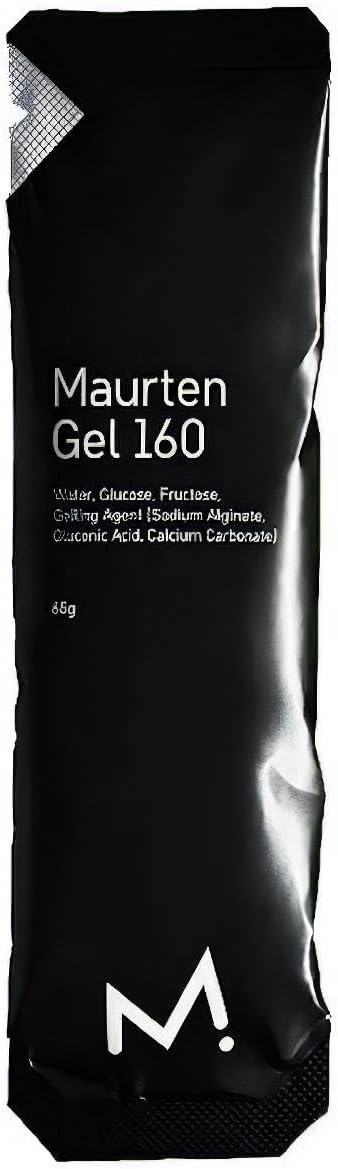
- Gels are the fastest carbohydrate. Our pick is the Maurten Gel 160: 40 g of carbs per gel and easy on the stomach even at high intensity.
- Drink mix covers the carbs you can’t chew on climbs. SiS Beta Fuel packs 80 g of carbs per serving.
- Solid food for the first half of the route: bars and whatever the feed stations offer.
Full comparison and dosing in our guide to the best gels and bars for gran fondo.
Bike and gear: what you need
You don’t need a new bike. You need one that won’t let you down over 150 km:
- Tubeless tyres. They’re the single upgrade that saves the most gran fondos, because they seal most punctures on their own. The Continental GP5000 S TR is the reference tyre most gran fondo riders run. See the full tubeless tyre comparison and set your pressure with the tyre pressure calculator.
- Mandatory gear: certified helmet, race number, chip and, at many events, lights. The full list is in our gran fondo mandatory gear checklist.
- A saddle you’ve already done 100 km on. Race day is not the day to try one. If yours hurts, start with our premium saddle guide.
- Sun protection. Six hours in the sun at altitude burns you even on cloudy days. Our sunscreen for cyclists comparison covers the ones that don’t run into your eyes.
Race day: how to pace a gran fondo
- Start slower than you think. The first 20 km of a mass start is where most people ruin their day, chasing wheels at an effort they can’t hold for six hours.
- Ride the climbs at your own pace, not the group’s. On the flat, sit in a group: drafting saves up to a third of your effort.
- Don’t skip the feed stations, even if you’re carrying enough. Topping up bottles costs a minute; running dry costs twenty.
- Know the cut-off times at each control point before you start, and plan your pace around them.
FAQ
What is a gran fondo?
A gran fondo is a long-distance, mass-participation road cycling event with a timed route, closed or controlled roads, feed stations and mechanical support. Anyone can enter; most riders are amateurs riding against the clock and against themselves, not for a win.
How long is a gran fondo?
The long route of a gran fondo usually runs from about 120 to 200 km with 2,000 to 3,500 m of climbing. Most events also offer a shorter medio fondo of roughly 80 to 110 km, and a few extreme ones go further, like Mallorca 312 at 312 km.
Is a gran fondo a race?
Not in the usual sense. There is a start gun, a timing chip and a classification, but the vast majority of riders are aiming to finish within the cut-off time or beat their own target. There are no teams and no prize for most of the field.
What is the difference between a gran fondo and a medio fondo?
Only the distance. The medio fondo is the short route of the same event, usually 80-110 km, sharing the start and part of the course. It’s the right choice for a first event.
Do I need a special bike for a gran fondo?
No. Any road bike in good condition works, as long as it has working brakes, reliable tyres and gearing that gets you up the climbs. The best upgrades are tubeless tyres and a compact crankset with a wide cassette.
Pick your gran fondo
Your first step is the same whatever your level: choose the event and put it in your diary. Open the gran fondo calendar, filter by month or region, and check when registration opens before it sells out.